
Primary Years Program (PYP)
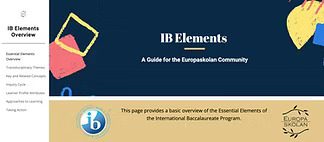
Being an IB world school means that it is our aim to educate for life. Our ambition is to create internationally minded and knowledgeable citizens. We know that our students are provided a strong foundation for success both socially and academically. Many come back to visit providing us with positive feedback. To access more in-depth information and an overall IB Elements overview, please click on the image to the right of this text.
Knowledge
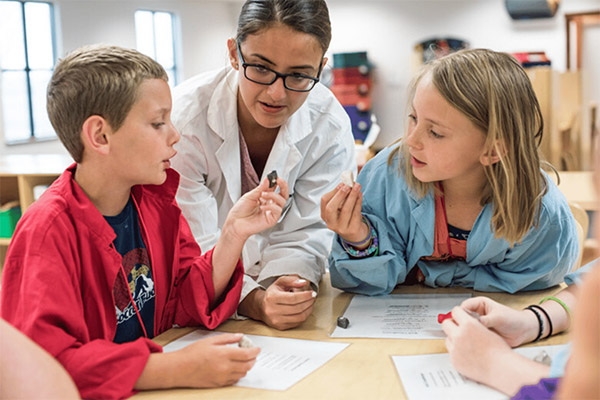
What do we want the students to know?
As the PYP is a transdisciplinary program most subjects are taught within our units of inquiry. Each academic year consists of six units of inquiry. These units are based upon a central idea, which the teacher and the students explore for a number of weeks. Both students and parents need to be actively working with the central idea during the current unit. Doing so helps students deepen their understanding and inquire deeper into the unit at hand.

Concepts
What do we want the students to understand?
Teachers and students will engage in inquiry through specific conceptual lenses to afford them opportunities to make connections across subject areas.
PYP Key concepts:
- Form
- Function
- Responsibility
- Reflection
- Causation
- Connection
- Change
- Perspective
Skills
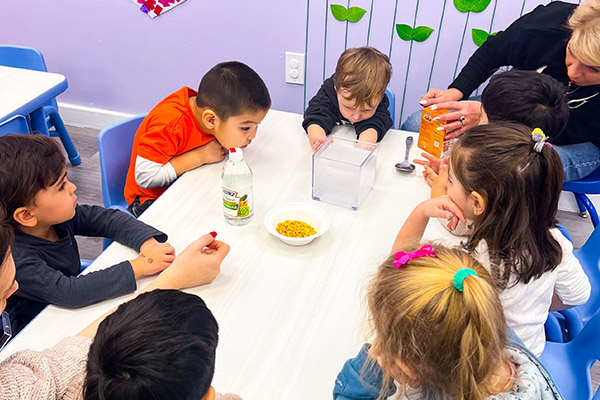
What do we want the students to be able to do?
It is important for the student to not only learn certain skills, but also to understand them and to be able to connect skills in different subject areas to one another. When studying a unit of inquiry, the teacher identifies which skills will be necessary for the students to develop and understand. Students will have the opportunity to reflect on learned skills and to what extent they think the skills were applied during the unit of inquiry.
The PYP Transdisciplinary Skills:
- Thinking Skills
- Social Skills
- Communication Skills
- Self-management Skills
- Research Skills

Attitudes
What attitudes do we want the students to demonstrate?
As the PYP program strives to educate the whole child, it has identified a set of personal attitudes that are necessary to become an internationally-minded person in society. The teacher will identify and analyze these attitudes with students, thus making the attitudes an important part of everyday school life.
The PYP Attitudes:
- Appreciation
- Creativity
- Independence
- Curiosity
- Integrity
- Confidence
- Empathy
- Respect
- Cooperation
- Commitment
- Enthusiasm
- Tolerance
Action
How do we want the students to act?
The PYP believes that successful inquiry will lead to responsible action. As an IB school, it is our obligation to guarantee that there is opportunity for action within units of inquiry. Teachers will guide students in choosing action, as well as acting and reflecting over their action in order to make a meaningful difference in the world.
The PYP Exhibition
The ‘Exhibition’ is an important component of the PYP. In the final year of the programme, students undertake a collaborative interdisciplinary inquiry process that requires them to identify, investigate and propose solutions to real-life issues or problems. Students present their findings to the community. As the culminating experience of the PYP, the Exhibition offers students an exciting opportunity to demonstrate independence and responsibility for their own learning while celebrating their transition from the PYP to the MYP.
Middle Years Program
Being an IB world school means that it is our aim to educate for life. Our ambition is to create internationally minded and knowledgeable citizens. We know that our students are provided a strong foundation for higher education, whether it be for a Swedish gymnasium, the IB Diploma program or a high school somewhere else in the world. Many students return to visit providing us with positive feedback.
According to IB, “MYP aims to help students develop understanding, their emerging sense of self and responsibility in their community.”
The MYP is taught according to guiding principles such as teaching and learning in context; conceptual understanding; approaches to learning (ATL), and service as action, through community service projects.
Teaching & Learning in Context
Learning is provided context, and connected to students’ own lives and their experience of the world. With the application of global contexts, MYP students are encouraged to develop an understanding of “their common humanity and shared guardianship of the planet” by exploring the following areas:
- Identities and relationships
- Personal and cultural identity
- Orientations in space and time
- Scientific and technical innovation
- Fairness and development
- Globalisation and sustainability


Conceptual Understanding
MYP students use concepts to explore issues and ideas of personal, local and global significance, and examine knowledge holistically. The MYP prescribes 16 key interdisciplinary concepts, along with related concepts for each discipline.
Approaches to Learning (ATL)
ATL helps students to “learn how to learn.” ATL provides a basis for independent learning and encourages the application of knowledge and skills in previously unfamiliar contexts, thereby encouraging the development and application of students’ social, thinking, research, communication and self-management skills.

Service as Action
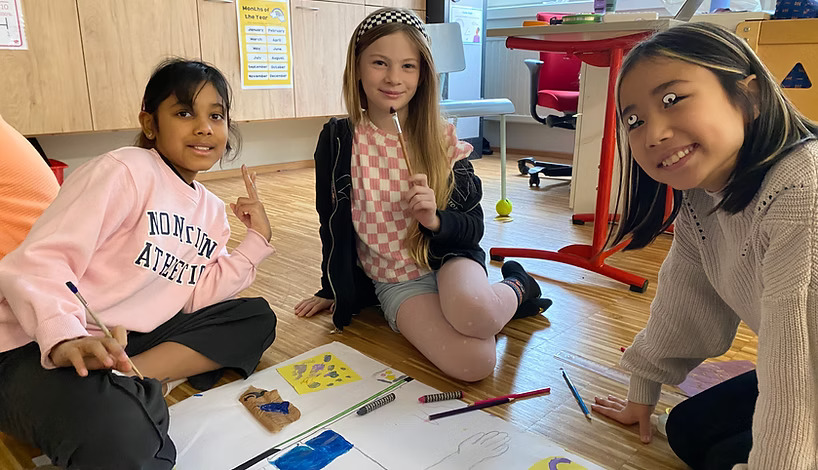
All IB students are encouraged to be caring members of the community who demonstrate a commitment to service: a desire to positively impact the lives of others and the environment. Students “take action” when they apply what they learn in the classroom – and elsewhere – to everyday life.
After School Care
We provide after school care for PYP Year 1 to Year 4 pupils, ‘förskolklassen’ to Year 3 in the Swedish educational system, equivalent to Sweden’s “fritidshem”.
Our ASC staff are dedicated, professional and caring, giving pupils the attention and guidance they need to participate in meaningful, learning-based activities. Staff are drawn from a variety of academic backgrounds. They have extensive pedagogical knowledge and a sincere passion for working with children. They are also international, coming from a variety of different countries and cultural backgrounds. ASC takes place in classrooms, utilizing various school facilities as well as in local attractions such as city parks and museums.
Students engage in arts and crafts, conduct science experiments, and explore the world through guided activities and educational play.
Activities
ASC staff plan activities in line with the class läroplan which are based on the principles of both Lgr22 and IB curriculum. As part of our programme we have planned afternoons where we work on Unit projects while in ASC to stimulate the students’ development and learning as well as offering a meaningful leisure time.
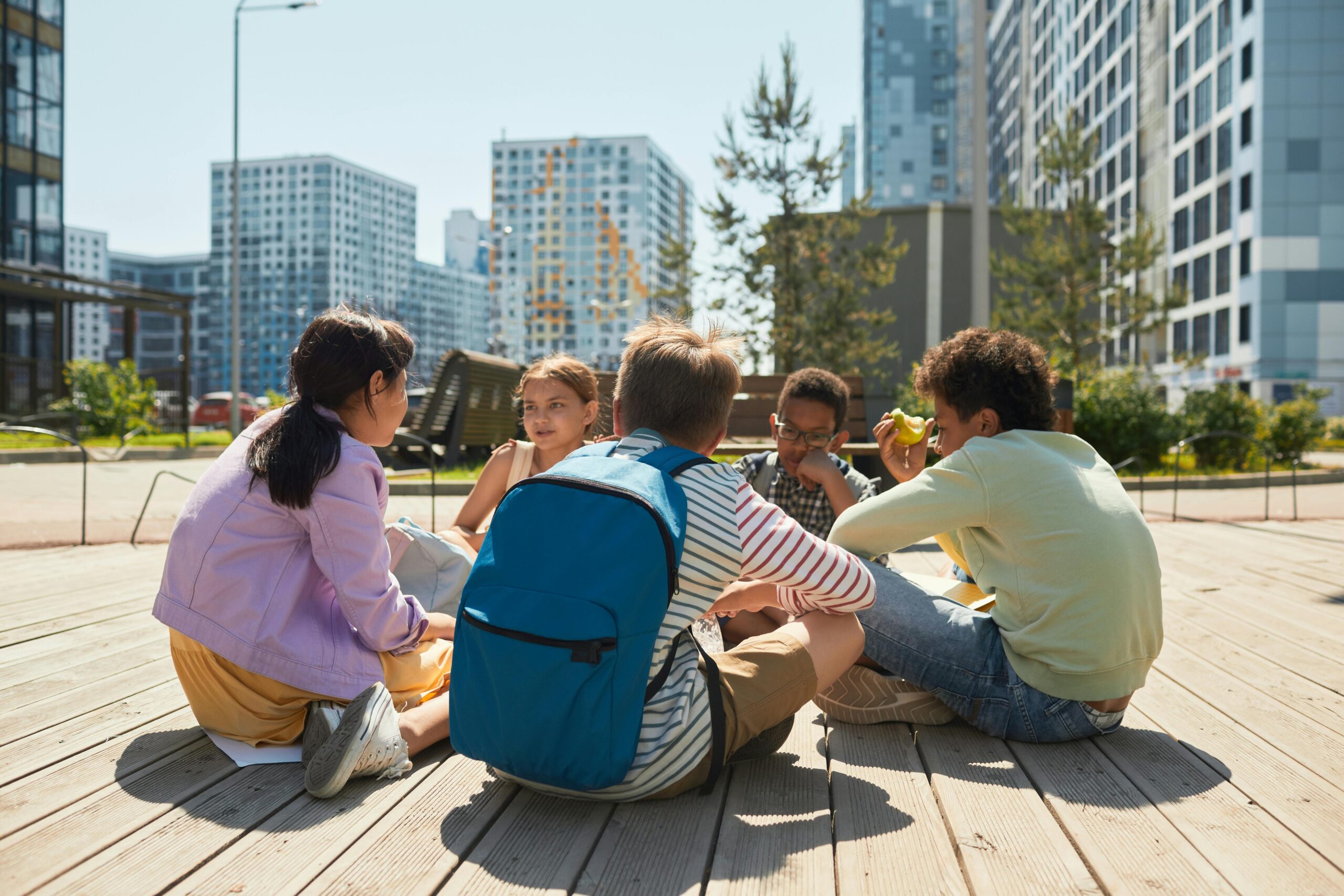
Outings
Sample Classroom Schedules
IBEY Standard Schedule
7:30 School opens
8:30 Arrival
9:10 Unit Lesson
9:30 Circle time
9:45 Literacy Stations
11:45 Lunch
12:30 PSPE lesson
12:50 Math
13:30 After School Care

PYP Standard Schedule
7:30 School opens
8:30 Arrival
9:10 Unit Lesson
10:00 Mathematics
11: 15 Lunch
11:45 Outing
12:45 Swedish
13:45 Break
14:00 Music
14:30 After School Care